
bio
I am a Full Professor at the Department of Applied Informatics, UNIRIO, a Research Affiliate at MIT Sloan, a CNPq researcher and member of the Education Board of SENAC. I hold a Ph.D. from Stanford University (1992), and a pos-doc at MIT (2013 and 2022). My work focuses on Artificial Intelligence (AI), Collective Intelligence (CI), and AI Ethics, particularly in augmenting human decision-making and addressing algorithmic bias.
I have authored over 250 publications in high-impact journals and leading conference proceedings, with a Google Scholar h-index of 28 (as of May 2025). Throughout my academic career, I have advised 38 master's and 15 doctoral students. I am a Senior Member of the IEEE, serve on editorial boards of prominent AI journals, and actively participate in program committees. I have delivered keynotes, tutorials, a TEDx talk, and, more recently, presented at the Harvard Radcliffe Institute.
I also have extensive experience in innovation. From 1996 to 2017, I directed ADDLabs, an AI research laboratory focused on developing advanced solutions for the petroleum industry. During this period, the lab successfully created over 20 AI-based systems, securing more than $5 million in research and development funding.
I have held leadership roles as Chair of the Informatics Graduate Program and Strategic Committee Member, and I actively contribute to national education policy as a member of SENAC’s Advisory Committee (2025-2027). I am passionate about international research collaboration, having coordinated funded projects and conducted extended research visits at Stanford, MIT, and Universidad Carlos III de Madrid.
Lattes: http://lattes.cnpq.br/4879977915136752
h-index (Google Scholar) = 28
https://scholar.google.com/citations?user=qN-wg74AAAAJ&hl=en
projects
research
AI for Social Good: Health and Education
This research line focuses on the development and application of artificial intelligence solutions aimed at social good, with an emphasis on the fields of health and education. We investigate how AI can support the diagnosis and monitoring of conditions such as depression, promoting explainability and trust in the systems. In education, we explore the use of AI techniques for personalizing learning, identifying dropout risks and supporting decision-making by managers and teachers. The goal is to generate a positive impact with ethical, accessible, and people-centered solutions.
Algorithmic Transparency and Explainability in Sensitive Systems
This research line investigates how to promote transparency and fairness in automated decision-making systems applied to sensitive contexts, such as finance and mental health. In the financial sector, we analyze biases in credit decisions related to gender, education, and socioeconomic status, using fairness metrics and explainability techniques to make models more auditable and ethical. In parallel, we study the role of explanations in depression diagnosis support systems, aiming to understand how to make the model’s decisions more understandable and trustworthy for both experts and patients. The overall goal is to contribute to the development of fairer, more transparent, and human-centered AI systems.
AI for Dialogue and Mutual Understanding in Polarized Societies
This research line investigates how artificial intelligence can help identify convergences between proposals from groups with different beliefs and demographic profiles, based on issues of collective interest. We initially use AI to detect similarities in intent and later to rewrite ideas in a neutral way and assess their acceptance among opposing groups. Experiments inspired by The Moral Machine measure the degree of polarization and test strategies to mitigate it. A subproject analyzes the relationship between monetization and aggressive comments on YouTube videos. The central focus is to promote dialogue and mutual understanding through algorithmic solutions.
innovation
I am the founder and was the coordinator of ADDLabs - Laboratory for Active Documentation and Intelligent Design, which I led from 1996 to 2017. During this period, I transformed the lab into a hub for applied technological innovation, focusing on artificial intelligence, computational design, and decision support systems for complex engineering and industrial problems.
I coordinated more than 10 long-term projects funded by Petrobras, Shell, FINEP, CNPq, FAPERJ, and networks such as RECOPE-IA, always in collaboration with domain experts. The solutions we developed were implemented in real companies, with measurable impact and ROI exceeding 10x in several cases.
These projects combine symbolic AI, machine learning, case-based reasoning, fuzzy logic, neural networks, constraint programming, and expert systems, creating technologies that go beyond academic contributions. All projects resulted in software systems that were deployed, many of which are still in use (as of 2025). Projects in this portfolio include:
-
ADDVAC1995
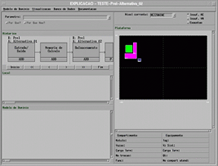 An intelligent assistant based on AI for the design of HVAC (heating, ventilation, and air conditioning) systems on offshore oil platforms. The system assists engineers in thermal modeling and sizing, evaluating environmental constraints, energy efficiency, and technical standards. It integrates optimization and simulation algorithms to propose context-adapted solutions, focusing on safety, comfort, and operational performance.
 -
ADDPROC1996
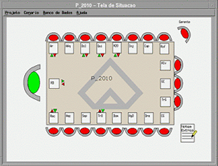 A case-based reasoning platform for automating the design of offshore platforms. It retrieves past experiences and offers solutions adapted to new contexts, promoting standardization, time savings, and improved design quality.
 -
ADDGeo1998
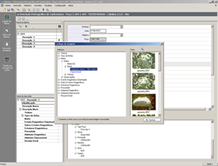 A hybrid intelligent system for the automated determination of electrofacies and lithological structures, using symbolic AI algorithms and machine learning to analyze geophysical data and well logs. The tool supports decision-making in geological modeling, with precision in identifying rock formations relevant to oil exploration.
 -
ADDSUB2000
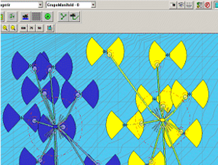 A decision support system for the design of subsea pipelines, applying symbolic AI, production rules, and optimization methods to generate viable technical alternatives. It enables automation of technical documentation and justification of engineering decisions, reducing risks and accelerating the design cycle of subsea systems.
 -
PorAqui2002
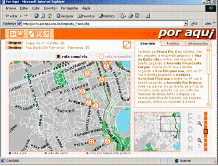 A smart routing app that incorporates landmarks significant to the user, such as bakeries, schools, or community centers. It integrates personalized maps with contextual inclusion to support more intuitive, safe, and accessible urban routes.
 -
ADDFlowlift2005
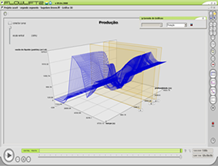 An intelligent simulation system for the gas-lift method, aimed at optimizing oil production. The solution integrates well geometry data, physico-chemical fluid characteristics, and production goals to simulate pressures, flow rates, and operational conditions. It supports decision-making on gas injection, valve configuration, and production transition scenarios, promoting significant efficiency gains in complex environments.
 -
Bombeio2007
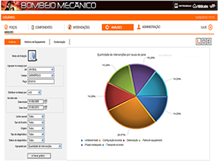 An intelligent diagnostic and failure prediction system for mechanical pumping in oil extraction. It uses neural networks and supervised learning techniques to analyze operational patterns, predict failures, and recommend interventions, optimizing maintenance of critical equipment and increasing operational reliability.
 -
ADDGDPO2008
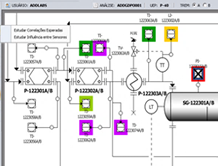 A predictive and explainable analytics tool for intelligent monitoring of offshore platform equipment. It integrates symbolic AI, statistical models, and interactive visualizations to identify failure patterns, forecast performance, and enhance operational efficiency of industrial systems.
 -
ACR2009
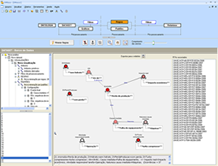 An intelligent system for root cause analysis of accidents in industrial environments. It uses knowledge representation and causal networks to model the chain of events, enabling simulations, explainable diagnostics, and recommendations to prevent recurrence.
 -
ADDSGA2010
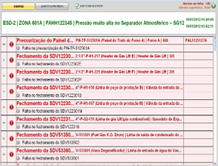 An AI-based alarm management system focused on the intelligent prioritization of alerts in critical situations. It analyzes multiple streams of operational data to identify relevant events in real time, reducing information overload and supporting decision-making in emergency scenarios.
 -
ADDOrca2011
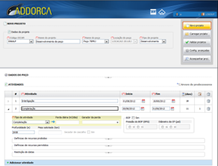 An intelligent system for scheduling and resource allocation in offshore oil fields, focusing on rigs and vessels. It integrates constraint programming, symbolic AI, and risk analysis to optimize the sequence of well operations, respecting operational and engineering constraints. It allows simulation of multiple scenarios and supports risk mitigation during reservoir development and exploration phases.
 -
ADDPrazo2013
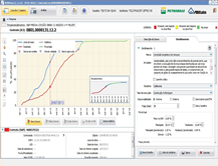 An intelligent system for estimating and controlling deadlines in engineering projects, combining symbolic AI techniques, project history, and case-based reasoning. The system assesses risks, technical complexity, and task interdependencies to generate realistic schedule forecasts, adjustable in real time. It was developed for high-variability, high-uncertainty contexts such as those faced by the oil and gas industry.
leadership
Leading ADDLabs for over two decades was a transformative experience. I managed a team of around 70 researchers, fostering an interdisciplinary environment that brought together computer scientists, engineers, designers, and specialists in Artificial Intelligence and Human-Computer Interaction.
I secured and managed funding from various agencies and companies, especially Petrobras, which enabled us to build a dedicated headquarters for the lab — a space focused on applied innovation, talent development, and technology transfer.
I coordinated the graduate program in Applied Informatics at the Federal University of the State of Rio de Janeiro (UNIRIO, 2020-2021) and have been a member of its strategic committee since 2020. Additionally, I serve on the UNIRIO Scientific Committee and on the Educational Advisory Board of SENAC-RJ. Since 2018, I have also been a member of the Special Committee on Collaborative Systems of the Brazilian Computer Society (CESC-SBC). These roles highlight my engagement with the national academic and scientific community.
I have coordinated projects with international universities (Universidad Carlos III de Madrid and MIT) and, since 2023, I have been an affiliated researcher at the MIT Sloan School. I currently coordinate, on the Brazilian side, an Erasmus+ K171 project with Vilnius University (Lithuania). These are clear indicators of international involvement.
I have supervised 38 master's dissertations and 14 doctoral theses, always encouraging projects with strong connections to real-world challenges from industry, the public sector, and civil society. Many of these works have resulted in impactful publications, functional prototypes, and transferred technologies.
My leadership combines strategic vision, a commitment to excellence, and a deep belief in the power of education as a driver of transformation. This vision continues to guide me in the projects I lead and the networks I am part of today.
news
-

Senac Rio Summit - Senac RJ
An innovation festival where you can experience new technologies and learn how to make money with them.https://www.youtube.com/watch?v=4IurRHFO65U&list=PLXRooOj-v-zWqGpamELsysaXR1xk16uZU&t=7334s -

HUGG 96 years old
At 96 years old, HUGG celebrates its history, professionals, and the future of healthcare.https://www.gov.br/ebserh/pt-br/hospitais-universitarios/regiao-sudeste/hugg-unirio/comunicacao/noticias/aos-96-anos-hugg-celebra-historia-profissionais-e-futuro-da-assistencia -
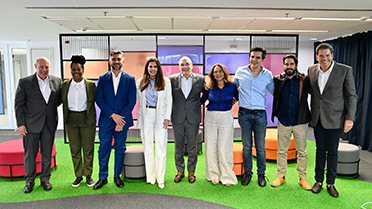
First meeting of the SENAC Education Council
The members of the Board are: Gabriel Chalita, Alexandre Accioli, Anderson Pedroso, Claudia Romano, Ronaldo Lemos, Sinara Rúbia and Cristina Garcia.https://www.rj.senac.br/ -
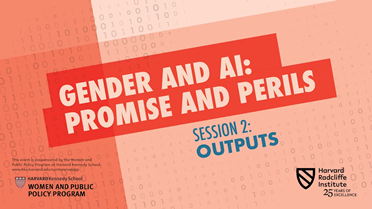
Gender and AI: Promise and Perils | Session2: Outputs
Guest speaker at Harvard.https://www.youtube.com/watch?v=G3l45KKgBlA&t=1608s -

TEDx Niterói: Human bias and the ethics behind Artificial Intelligencehttps://www.youtube.com/watch?v=PVs9jg1XRU8
-
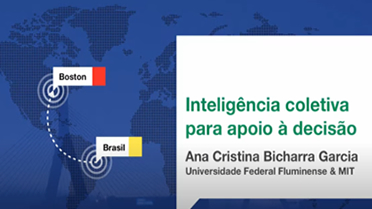
Collective Intelligencehttps://www.youtube.com/watch?v=KJojlfjtz2s
-

Artificial Intelligence and Its destinyhttps://www.youtube.com/watch?v=BRDfuJJ8jjI
-
Virtual Realityhttps://www.youtube.com/watch?v=0KgEZpgJF5Q
-

-

Click for Computinghttps://www.youtube.com/watch?v=BfPQtOQSDlc
-

Ambient Intelligencehttps://www.youtube.com/watch?v=znsYq5xO8pw
teaching
2026.1
- Scientific Research Methodology
- Human-Computer Interaction
2026.2
- Artificial Intelligence
- Collaborative Systems
papers
- Garcia, A. C. B.; Vivacqua, A. S. (2024). Navigating virtual spaces: Understanding user adaptation in online meetings during the pandemic. International Journal of Human-Computer Studies, 188, 103274.
- Garcia, A. C. B.; Garcia, M. G. P.; Rigobon, R. (2023). Algorithmic discrimination in the credit domain: What do we know about it? AI & Society, 1-40.
- Cardoso Durier da Silva, F.; Bicharra Garcia, A. C.; Wolfgang Matsui Siqueira, S. (2023). Sentiment Gradient - Improving Sentiment Analysis with Entropy Increase. Inteligencia Artificial, 26, 114-130.
- Ribeiro, L. A. P. A.; Garcia, A. C. B.; dos Santos, P. S. M. (2022). Dependency Factors in Evidence Theory: An Analysis in an Information Fusion Scenario Applied in Adverse Drug Reactions. Sensors, 22, 2310.
- Oliveira, C.; Garcia, A. C. B.; Diirr, B. (2022). Why shop on social media? A systematic review. International Journal of Internet Marketing and Advertising, 16, 344-368.
- Garcia, A. C. B.; Vivacqua, A. (2021). Should I stay or should I go? Managing Brazilian WhatsApp groups. First Monday, 1-7.
- Oliveira, C. R.; Garcia, A. C. B.; Vivacqua, A. (2021). The cost structure of influencers’posts: The risk of losing followers. Personal and Ubiquitous Computing, 1, 1-22.
- Galvão, V. F.; Maciel, C.; Pereira, R.; Gasparini, I.; Viterbo, J.; Garcia, A. C. B. (2021). Discussing human values in digital immortality: Towards a value-oriented perspective. Journal of the Brazilian Computer Society, 27, 1-26.
- Pintas, J. T.; Fernandes, L. A. F.; Garcia, A. C. B. (2021). Feature selection methods for text classification: A systematic literature review. Artificial Intelligence Review, 54, 6149-6200.
- Cinalli, D.; Martí, L.; Sanchez-Pi, N.; Garcia, A. C. B. (2020). Collective intelligence approaches in interactive evolutionary multi-objective optimization. Logic Journal of the IGPL, 28, 95-108.
- Sacramento, C.; Ferreira, S. B. L.; Capra, E. P.; Garcia, A. C. B. (2019). Accessibility and communicability on Facebook: A case study with Brazilian elderly. First Monday, 24, 1-7.
- Garcia, A. C. B.; Vivacqua, A. (2019). Grounding knowledge acquisition with ontology explanation: A Case Study. Journal of Web Semantics, 57, 1-16.
- Oliveira, C.; Garcia, A. C. B. (2019). Citizens’electronic participation: A systematic review of their challenges and how to overcome them. International Journal of Web Based Communities, 15, 123-150.
- Natal, I. P.; Correia, L.; Garcia, A. C. B.; Fernandes, L. A. F. (2019). Efficient out-of-home activity recognition by complementing GPS data with semantic information. First Monday, 24, 2.
- Vivacqua, A.; Garcia, A. C. B. (2018). ACoPla: A multi-agent simulator to study individual strategies in dynamic situations. Advances in Distributed Computing and Artificial Intelligence Journal, 7, 81-91.
- Maciel, C.; Roque, L.; Garcia, A. C. B. (2018). Maturity in decision-making: A method to measure e-participation systems in virtual communities. International Journal of Web Based Communities, 14, 395-416.
- Nascimento, F. R. A.; Cesar da Rocha, J.; Garcia, A. C. B. (2018). Automated Evaluation of Open Government Data Portals. International Journal of Electronic Government Research, 14, 57-72.
- Garcia, A. C. B.; Vivacqua, A.; Sanchez-Pi, N.; Martí, L.; Molina, J. M. (2017). Crowd-Based Ambient Assisted Living to Monitor the Elderly’s Health Outdoors. IEEE Software, 34, 53-57.
Recent Selected Peer-reviewed Conference Papers
- Nascimento, R.; Serra, C.; Nobre de Mello, A. C.; Garcia, A. C. B. (2025). Predicting Oncology Readmissions: A Machine Learning Approach Using the MIMIC-IV-ED Database. In Hawaii International Conference on System Sciences, Big Island, Hawaii. Manoa: ScholarSpace. BEST PAPER AWARD
- Paiva, R.; Cataldo, W.; Garcia, A.; De Mello, C. R. (2024). Digital Discrimination Detection in Ridesharing Services in Rio de Janeiro City. In 16th International Conference on Agents and Artificial Intelligence, Rome, pp. 1205-1212.
- Mattos, M.; Siqueira, S.; Garcia, A. (2024). Fair and Equitable Machine Learning Algorithms in Healthcare: A Systematic Mapping. In 16th International Conference on Agents and Artificial Intelligence, Rome, pp. 815-822.
- Rodrigues, H. S.; Moraes, L. O.; Santiago, E. S.; Campos, J. P. P.; Guimarães Júnior, E. S.; Wanderley, G. M. C. X.; Garcia, A. C. B.; De Mello, C. E. R.; Alvares, R. V.; Santos, R. P. (2024). Predicting Student Dropout in the Information Systems Undergraduate Program at UNIRIO Using Decision Trees. In XXXII Workshop sobre Educação em Computação (WEI 2024), p. 588.
- Pereira, M. B.; Lancelotte, F. S.; De Classe, T. M.; Garcia, A. C. B. (2024). Simulation Sickness in Virtual Reality Games: How to Relieve It - A Systematic Literature Study. In SVR 2024: Symposium on Virtual and Augmented Reality, Manaus, pp. 168-176.
- Nguema Ngomo, J. G.; Torres de Paiva, R.; Garcia, A. C. (2024). Fake News Detection by Machine Learning in Latin America: A Systematic Review. In Hawaii International Conference on System Sciences, Hawaii.
- Xavier, C.; Cataldo, W.; Siqueira, S. W. M.; Garcia, A. C.; Mello, C. (2024). Understanding the Negative Effects of Social Networking Mobile App Notifications on the Attention of Young People and Adults: A Systematic Literature Mapping. In Hawaii International Conference on System Sciences, Hawaii.
- Pinto, F.; Garcia, A. C. (2024). Facing Constitutive and Normative Aspects of Different Philosophical Currents When Approaching AI Ethics. In I Conferência Latino-Americana de Ética em Inteligência Artificial (LAAI-Ethics 2024), Porto Alegre, SBC, pp. 133-136.
- Do Nascimento, J. O.; Garcia, A. C. B.; Siqueira, S. W. (2023). Collaborative Elaboration of Design Fiction Narratives with Participatory Design Fiction Extend. In 26th International Conference on Computer Supported Cooperative Work in Design (CSCWD 2023), Rio de Janeiro, pp. 1330-1335. FINALIST IN THE BEST PAPER AWARD
- Nascimento, L. de F.; Souza, G. dos S.; Garcia, A. C. B. (2023). Machine-Based Stereotypes: How Machine Learning Algorithms Evaluate Ethnicity from Face Data. In XIX Brazilian Symposium on Information Systems (SBSI 2023), Maceió, pp. 159-166.
- Galvão, V. F.; Maciel, C.; Pereira, V. C.; Garcia, A. C. B. (2023). Acceptability and Renown of Digital Immortality Through the Lens of the User. In 2023 IEEE International Conference on Systems, Man, and Cybernetics (SMC), Honolulu, pp. 4464-4469.
- Morais, F. L. D.; Garcia, A. C. B.; Dos Santos, P. S. M.; Ribeiro, L. A. P. A. (2023). Do Explainable AI Techniques Effectively Explain Their Rationale? A Case Study from the Domain Expert’s Perspective. In 26th International Conference on Computer Supported Cooperative Work in Design (CSCWD 2023), Rio de Janeiro, pp. 1569-1574.
- Nascimento, L. de F.; Garcia, A. C. B. (2022). What's Behind a First Impression? Implications for Portrait Selection on Gig Work Platforms. In XVII Simpósio Brasileiro de Sistemas Colaborativos (SBSC Estendido 2022), pp. 39-43.
- Garcia, A. C.; Barros, M. O. (2021). Minimizing the Usage of SARS-CoV-2 Lab Test Resources Through Test Pooling Enhanced by Classification Techniques. In 54th Hawaii International Conference on System Sciences, Waikiki, pp. 3733-3742.
- Da Paixão Pinto, N.; Dos Santos França, J. B.; De Sá Sousa, H. P.; Vivacqua, A. S.; Garcia, A. C. B. (2021). Conversational Agents for Elderly Interaction. In 24th IEEE International Conference on Computer Supported Cooperative Work in Design (CSCWD 2021), Dalian, pp. 1-6.
- Daudt, F.; Cinalli, D.; Garcia, A. C. B. (2021). Research on Explainable Artificial Intelligence Techniques: A User Perspective. In 24th IEEE International Conference on Computer Supported Cooperative Work in Design (CSCWD 2021), Dalian, pp. 144-149.